Executive Summary
Report summary and executive narrative are visually anchored before the user reaches dense evidence.
THE TRANSFORMATION
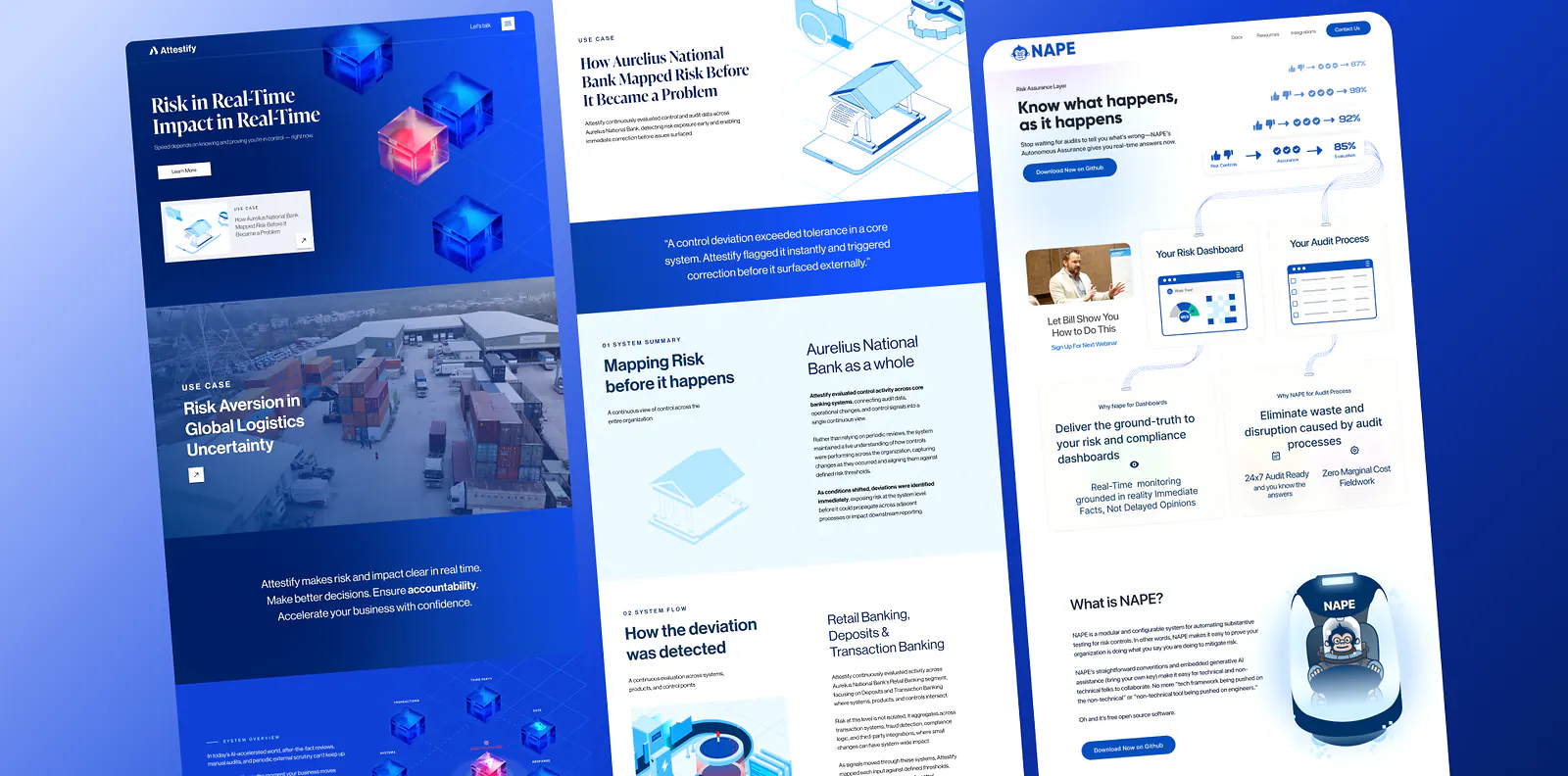
We designed NAPE and Attestify to continuously collect signals across business systems, helping organizations detect issues early, monitor regulatory readiness, and give executives real-time visibility into what requires attention before an audit ever begins.

Assurance report structure
The Attestify interface uses a native assurance icon system to turn long reports into recognizable sections: summary, exceptions, pipeline, evidence, tests, metadata, and appendix. Icons are functional hierarchy, not decoration.
Report summary and executive narrative are visually anchored before the user reaches dense evidence.
Evidence, execution, outcome, and completion states read as one controlled assurance flow.
Source files, artifacts, and supporting documentation.
Procedure runs, code execution, and validation state.
Result quality, exception state, and action requirement.
Finalized procedure context and audit-ready completion state.
Activity, action, and objective icons separate what happened from what needs to happen next.
Explorers and supporting references use distinct pictograms so users can move through long reports without losing context.
Executive overview
The transformation focused on turning dense compliance information into a clear assurance workspace: status, evidence, reporting, and executive interpretation in one coherent interface.
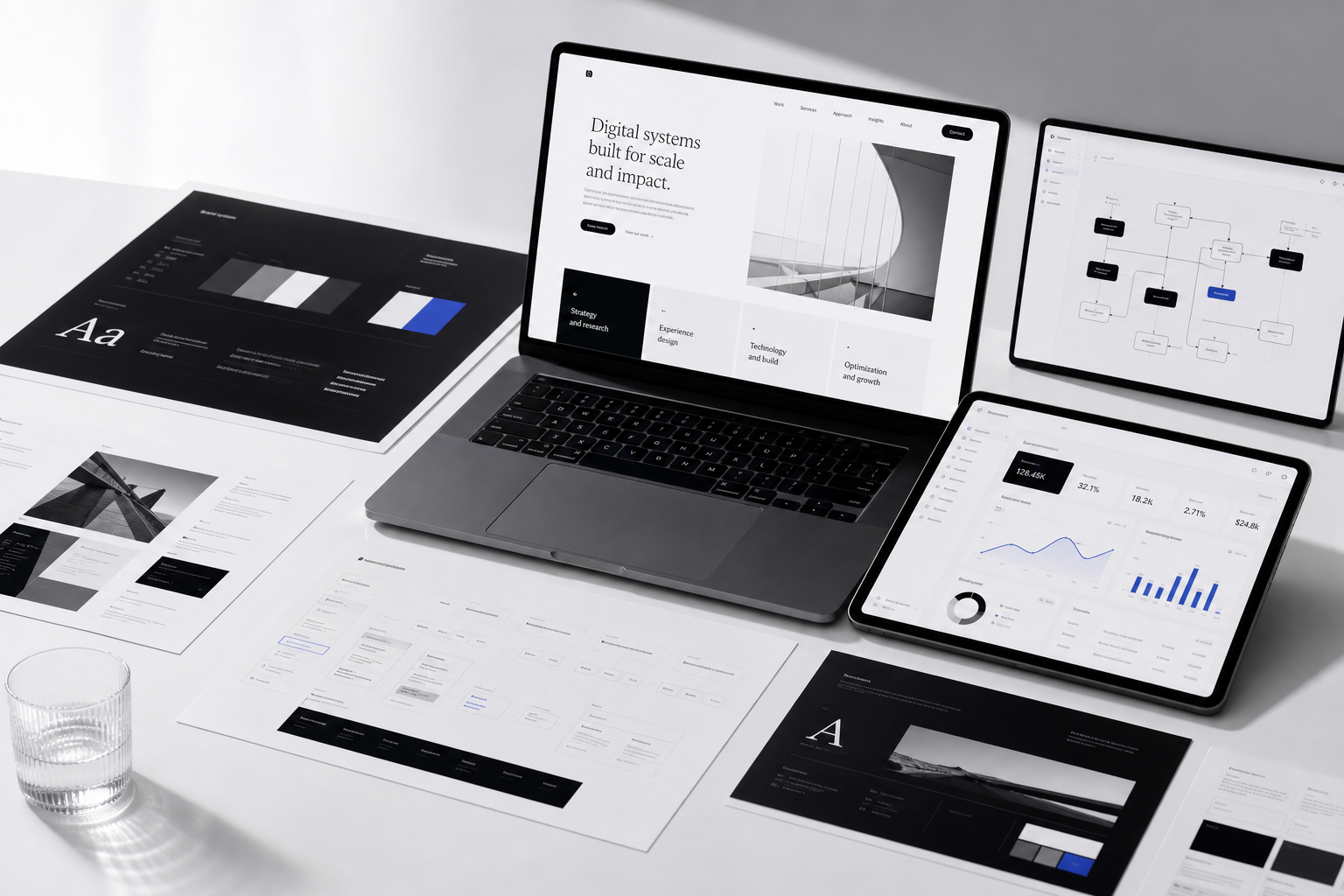
Brand foundation
Every transformation begins with a visual system. Before pages are designed or campaigns launch, we establish a scalable foundation that keeps every customer interaction consistent.
Color system
Typography
The heading typeface gives executive screens a clear hierarchy without turning the product into a static report.
The body typeface keeps dense compliance language, status notes, and table-adjacent content readable across screen sizes.
Connected data system
The platform experience is designed around measurable behavior: what executives review, where teams hesitate, which reports need attention, and which assurance signals create action. Data connections turn a static reporting flow into a system that can improve clarity over time.
Dashboard views, evidence expansion, report exports, and status checks show which assurance moments matter most.
Actions are connected to role, report type, risk state, and review path so product decisions reflect actual usage.
Repeated friction points inform interface changes, content hierarchy, and automation opportunities.
The system prioritizes meaningful engagement with executive-ready insights instead of passive report consumption.
Mobile-first experience

Mobile views prioritize status, risk signals, and next actions over dense tables. Large touch targets, simplified navigation, collapsed evidence areas, and concise summaries help stakeholders understand what needs attention fast.
User experience decisions
Executives see what changed and what needs attention before reading supporting evidence.
Long reporting rows become modular product screens with clearer hierarchy.
Evidence stays accessible without overwhelming the primary workspace.
Review, export, and attention states are visible in the interface.
We don't choose colors, typography, spacing, or layouts based on trends. Every design decision supports trust, usability, conversion, and long-term scalability.
The result was more than a cleaner dashboard. It became an application foundation that helps teams interpret assurance data, act faster, and scale future compliance modules with consistency.
Compliance reporting can become dense, slow, and difficult for executives to interpret without context.
Reframe the experience around decision clarity: what matters, what changed, what needs attention, and where evidence lives.
Use a product-grade enterprise aesthetic with restrained density, clear hierarchy, and fewer report-like surfaces.
Elevated assurance status, comparison, evidence, and workflow signals into visible modules instead of buried reporting rows.
Built reusable application patterns for cards, tables, status modules, detail panes, and executive summaries.